
Pt. 1 - The Visibility Strategy
How to Find and Win Speaking Engagements and Awards

Before we jump in, let me reintroduce what Modern Day Socialite actually is.
Modern Day Socialite is not about being social for the sake of being outside. It is a lifestyle and strategy resource for people who are booked and building. It is for the ones who want to use social capital, visibility, and intentionality to elevate their personal brand, career, or business. It is the guidebook I wish I had when I started navigating conferences, culture weeks, and every room where opportunity lives.
Now let’s get into how we got here 😊
A few weeks ago, I posted a thread saying that December and January are the perfect time to apply for speaking engagements and awards. That post took off. I got messages, comments, and reshares from people asking the same question:
“But how do you actually find these opportunities? And where do you start?”
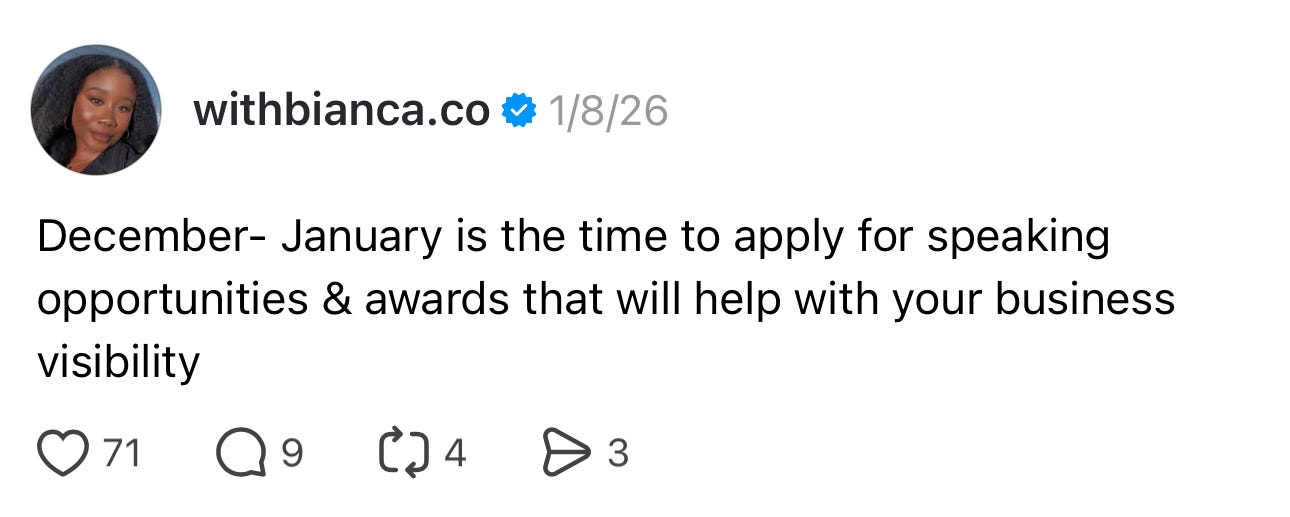
So today, I am breaking down the exact system I use.
This is how I plan for visibility.
This is how I decide what events I speak at, what awards I apply for, and how I position myself all year.
Let’s get into it.
1. Map out your goals
This is the part nobody wants to slow down and do, but it is what keeps you from wasting time.
Start by asking:
What do I want visibility to do for me this year?
Examples:
My goal last year was to position The Nola Collective within the tourism industry. Once that clicked, everything shifted. I started applying for tourism awards and speaking roles in that space. I ended up winning awards from the Downtown Development District and TTRA.
If your goal is career elevation, visibility might mean speaking at industry conferences or being featured on your company’s panel.
If your goal is building a creative brand, visibility might mean festivals like Essence Fest or CultureCon.
If your goal is entrepreneurship, visibility might mean applying for pitch competitions or founder showcases.
Once your goals are clear, you can move to the next step.
💡 Gem: Goals guide your visibility. If you do not know what you are aiming for, the opportunities that come to you will feel random or misaligned.
2. Identify your industries
You cannot apply for visibility opportunities if you do not know what industry you are actually in.
Most people box themselves into one area.
You are probably in more than one industry.
Examples of broad industries with federal or major funding:
Healthcare
Tourism
Education
Technology
Arts and Culture
Small Business and Entrepreneurship
Nonprofit and Community Development
Then get specific:
Tourism becomes cultural tourism or destination storytelling
Tech becomes creator tech or AI strategy
Education becomes student affairs or community partnerships
Then get niche:
Black women in entrepreneurship
Creative strategy for cultural cities
Corporate frameworks for creative founders
Example from my journey:
For years, I only said The Nola Collective was a digital media platform. Yes, that is true. But what unlocked my growth was understanding we are also in tourism. That awareness opened doors to awards, recognitions, and speaking opportunities I never even considered because I was not paying attention to that lane.
💡 Gem: Most visibility opportunities are hidden inside industry lanes you have not claimed yet.
3. Define your speaker topics
Now that you know your lane, it is time to articulate your expertise.
Do not say you can speak on “entrepreneurship” or “the creator economy.” That is too vague.
Pick 3 defined topics with clear angles.
Examples:
How to use corporate structure to scale creative businesses
How local culture shapes brand visibility and consumer trust
How to build a social strategy that bridges community, creativity, and business outcomes
These become your go-to topics for applications, emails, and pitches.
💡 Gem: Write your topics as solutions, not titles. Solve the problem the conference is trying to address.
4. Create your visibility list: Want to go, need to go, have to go
I divide my target events into three buckets.
Want to go
Dream stages and big names.
Cannes Lions
Essence Festival
Creative Collective NYC
Need to go
High value rooms where your peers grow and connect.
Afrotech
South by Southwest
Black Enterprise Summits
Have to go
Local or regional touch points that build your ecosystem and credibility.
Chamber of Commerce events
City or state tourism conferences
University leadership panels
As you start building out your list of want to go, need to go, and have to go events, you will notice something important. Most major conferences and cultural weekends offer both speaking opportunities and awards. I know this post leans heavily on the speaking side, but once you start researching and plotting everything inside your tracker, you will see how often the two overlap. The opportunities show up when you take the time to look.
💡 Gem: Visibility starts at home. You do not skip your ecosystem and jump straight to Cannes.
5. Search smart and track everything
Once your list is built, start searching these events directly.
Search terms I use on Google:
“Afrotech call for speakers 2025”
“Tourism awards nominations open”
“Creative founder awards 2025 deadline”
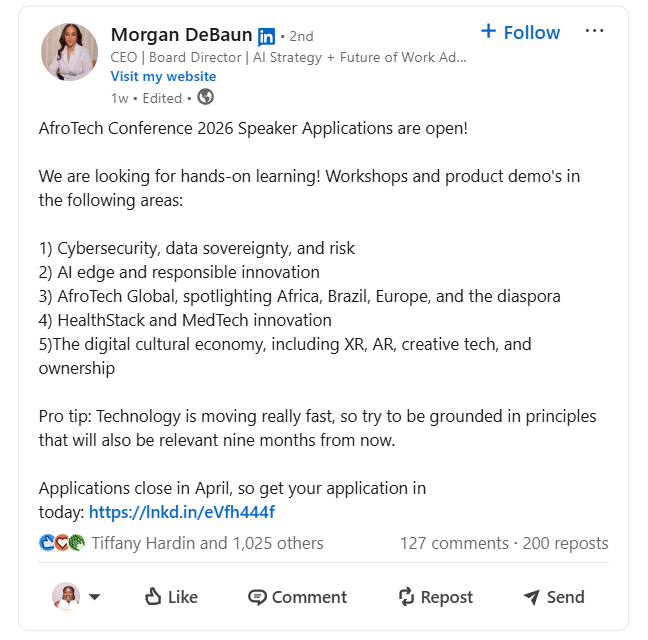
Then track everything in a Notion or Google Sheet:
Application deadlines
Required materials
Topics you submitted
Whether you need a nomination
Follow up dates
💡 Gem: Most conferences open applications around the same time every year. Even if the link is not live, save the page and check back.
6. Use Instagram and LinkedIn to your advantage
Instagram is honestly one of the best search engines now for flyers.
Search terms:
“Speaking Opportunities”
“Speaker call”
“Speaker Application”
“Panelists wanted”
“Conference speakers needed”
“Award nominations open”
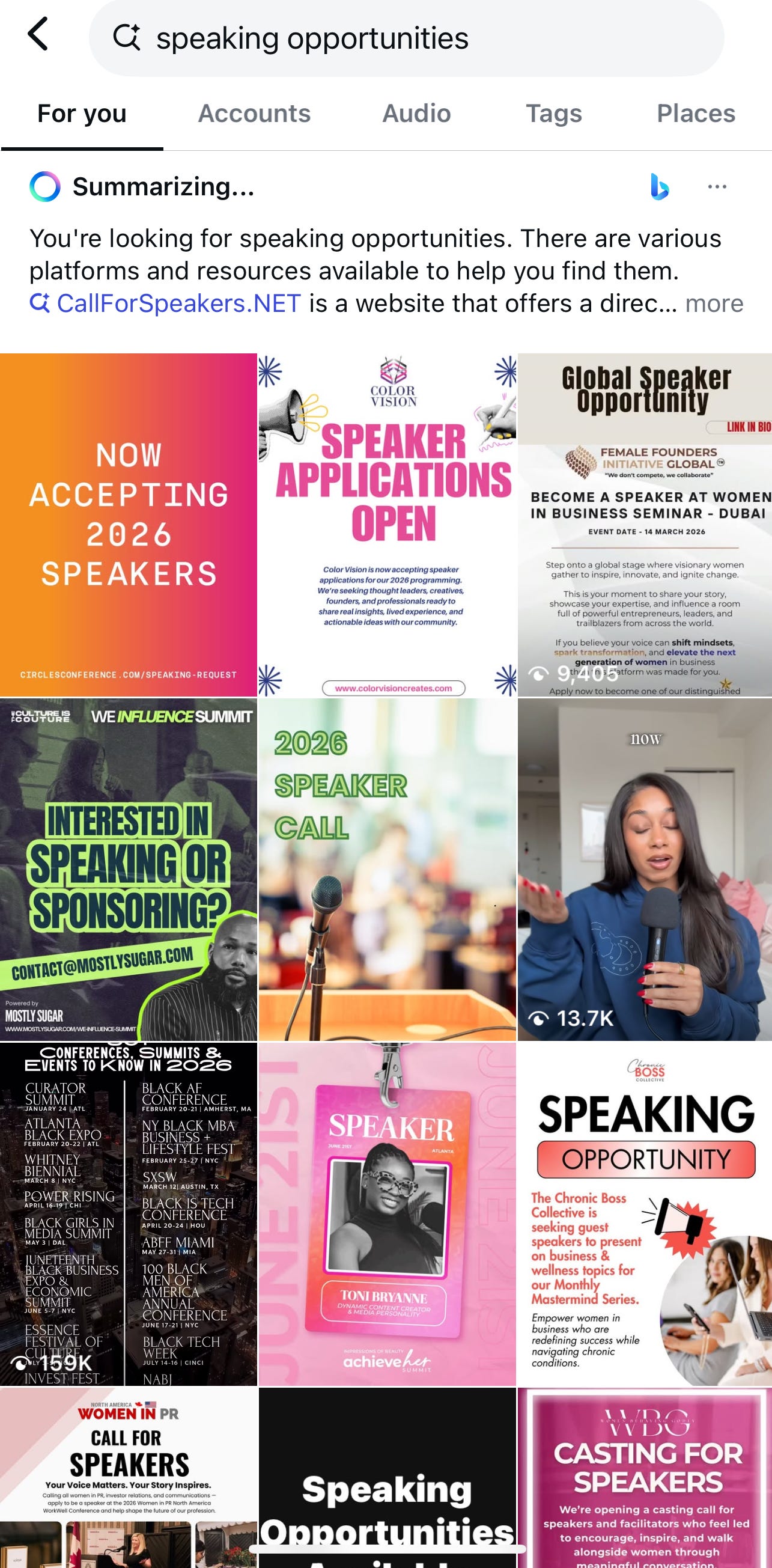
It pulls up flyers, posts, and event pages that you would never find on Google.
LinkedIn is great for:
Being found by people searching for speakers
Highlighting your speaker topics directly in your header
Seeing which events your peers are involved in
💡 Gem: Add “speaker” to your LinkedIn headline. It increases your chances of being found when people search for speakers.
7. Tap into Student Affairs and local institutions
People forget this lane.
Universities have:
Student Affairs
DEI offices
Leadership organizations
Professional development programs
These teams have budgets and need speakers.
And they appreciate speakers with real-world experience.
Email them your topics and your availability.
💡 Gem: Local speaking builds credibility faster than national speaking. Do not underestimate these rooms.
8. Build in awards as part of your visibility plan
Awards give credibility. Credibility increases visibility. Visibility leads to more speaking.
Start with:
Local 40 Under 40 lists
Industry specific awards (tourism, tech, media, entrepreneurship)
National lists
Plot them in your tracker.
Check deadlines.
Save links even if nominations are closed.
💡 Gem: Awards and speaking opportunities often share the same decision makers. When they see your name repeatedly in one area, you rise in the other.
Final Thoughts
Visibility is not luck. It is a system and a mindset.
You plan for visibility the same way you plan for money, partnerships, and opportunities.
If you follow this framework, you will have:
A clear direction
A clear industry lane
Clear speaker topics
A full pipeline of applications
A visibility calendar that grows year after year
Thank you for being an early reader of Modern Day Socialite! I am aiming to publish weekly and then twice a week as I build consistency. I appreciate every single person who is on this journey early, because I am building this in real time right alongside you.
Talk soon,
Bianca C.
Modern Day Socialite
If you want the templates and direct links to over 10 open speaking opportunities and award nominations, that is all in the paid version below⬇️
Keep reading with a 7-day free trial
Subscribe to Modern Day Socialite to keep reading this post and get 7 days of free access to the full post archives.